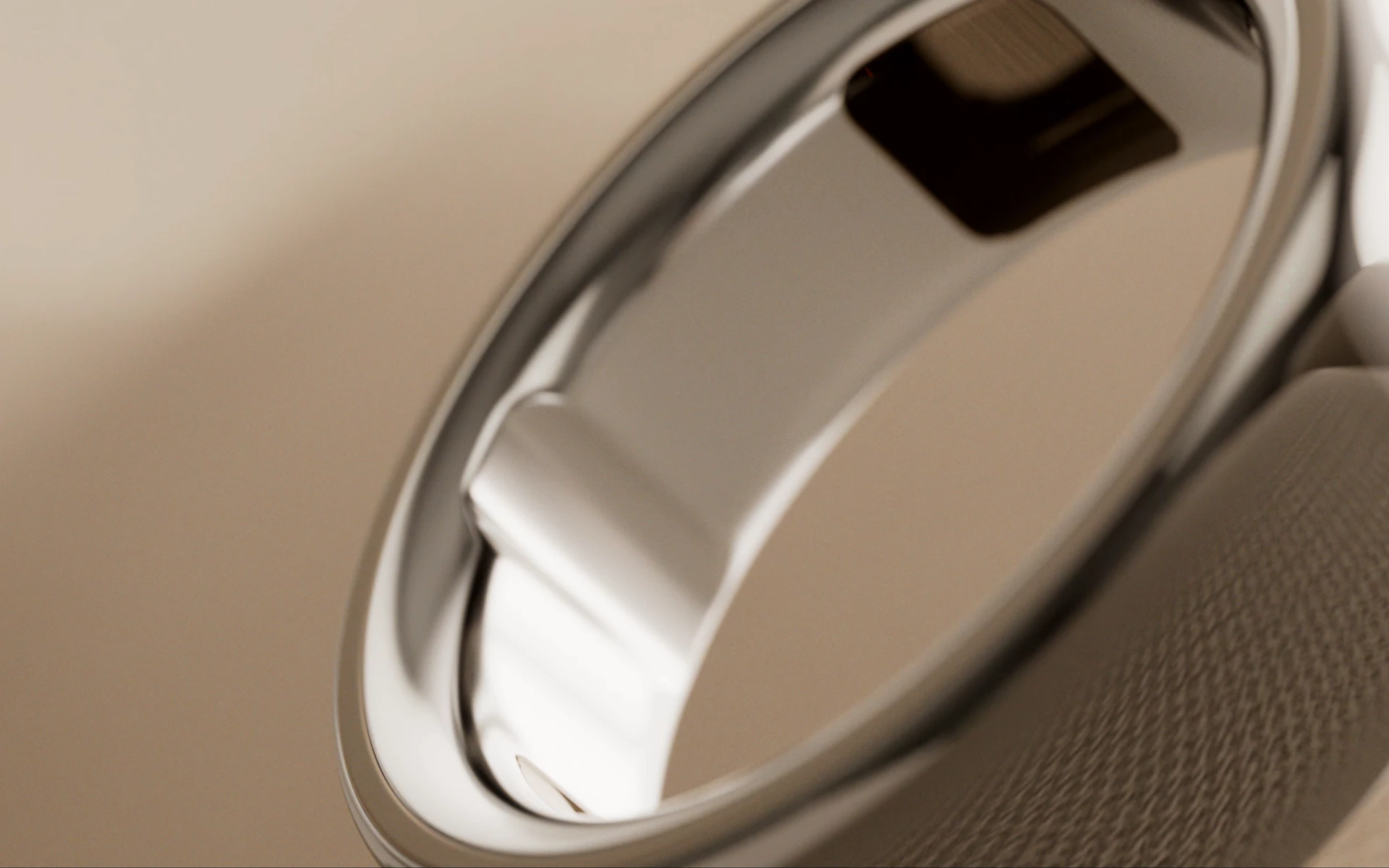
Oura Ring vs Apple Watch: the full comparison
Both track health. That's where the overlap ends. One is a passive sensor you forget you're wearing. The other is a mini-computer on your wrist that wants your attention.
| Feature | Oura Ring 4 | Apple Watch Series 10 |
|---|---|---|
| Sleep tracking accuracy | ⭐⭐⭐⭐⭐ Best in class | ⭐⭐⭐ Good but not great |
| HRV measurement | ⭐⭐⭐⭐⭐ Nightly + continuous | ⭐⭐⭐ Spot checks only |
| Battery life | ⭐⭐⭐⭐⭐ 7–8 days | ⭐ 18–36 hours |
| GPS | ❌ None | ⭐⭐⭐⭐⭐ Built-in |
| Notifications | ❌ None | ⭐⭐⭐⭐⭐ Full smartwatch |
| ECG | ❌ None | ⭐⭐⭐⭐⭐ Yes |
| Workout tracking | ⭐⭐⭐ Basic | ⭐⭐⭐⭐⭐ Excellent |
| Body temperature | ⭐⭐⭐⭐⭐ Continuous overnight | ⭐⭐⭐ Wrist temp (limited) |
| Wearability comfort | ⭐⭐⭐⭐⭐ Forget it's there | ⭐⭐⭐ Heavy on wrist at night |
| Price | $349 + $6/mo | $399–$499 (no sub) |
| 2-year total cost | ~$493 | $399–$499 |
| Water resistance | 100m / 10 ATM | 50m / 5 ATM |
Why Oura wins on sleep
The finger picks up blood flow better than the wrist. Fewer artifacts, thinner skin, less movement at night — all of it adds up to cleaner data. Oura's own clinical validation study put sleep staging accuracy at 79% against polysomnography (the lab gold standard). Most wrist wearables sit around 65–70%.
You feel this difference in practice. If you've ever woken up destroyed after your Apple Watch said "7 hours of sleep," the problem is likely that the staging was off — it counted light sleep as restorative sleep. Oura is significantly better at telling you you only got 40 minutes of deep sleep when that's what actually happened.
The battery thing matters too. Apple Watch owners charge it overnight, which means they're missing the entire sleep window. If your ring is dead, you have no data. Oura lasts 7–8 days and captures every night without you thinking about it.
Where Apple Watch is genuinely better
Running without your phone? You need GPS, which the Oura Ring doesn't have. Worried about atrial fibrillation? The Apple Watch ECG is FDA-cleared and actually useful. Want to pay at the register, reply to a text, or ask Siri something — you get the idea. The Oura Ring does none of this.
Apple Watch is the better choice for anyone who wants one device that handles their whole day. Notifications, fitness apps, Strava, Apple Fitness+, fall detection — it's a platform, not just a sensor. Oura is only a sensor. That's by design, and it's why the data is better. But it means you genuinely can't replace an Apple Watch with it.
Using both — the setup that actually works
A significant chunk of Oura users also wear an Apple Watch. The split makes sense once you think about it: Apple Watch on the wrist during the day for workouts, notifications, and GPS. Oura Ring on the finger around the clock for sleep and recovery data. The Apple Watch charges at night while you sleep — its battery problem disappears entirely.
Oura syncs with Apple Health, so workout data from the Watch and sleep data from the ring end up in the same place. They don't step on each other. Combined cost is roughly $850 upfront plus $6/month — not cheap, but it's the best health tracking setup available without clinical equipment.
Sleep Tracking: Oura vs Apple Watch in Real Use
- Accurate REM and deep sleep staging
- Nightly HRV and resting heart rate
- Body temperature deviation alerts
- Readiness score: science-backed recovery metric
- No charging anxiety — lasts the whole week
- Sleep tracking is secondary to its core features
- Must charge before bed if battery is low
- Sleep stages less accurate than ring sensors
- HRV measured only during overnight calibration
- Heavy and bulky for sleeping
HRV: Why This Is the Key Difference
Heart rate variability (HRV) is the most important biometric for recovery and stress management. High HRV = your nervous system is recovered. Low HRV = you're under stress, getting sick, or overtrained.
Oura Ring measures HRV throughout the night and gives you a rolling baseline. Every morning you see whether your HRV is above or below your personal average — and whether to train hard or take it easy. The Apple Watch measures HRV in the background during sleep, but the data is less granular and the Readiness-equivalent metric (if you use a third-party app) is less reliable.
Who should buy the Oura Ring
If sleep is your problem — you wake up tired, you can't figure out why, your energy is inconsistent — Oura gives you data you can actually use to change things. Same if you're an athlete trying to avoid overtraining, or if you want temperature-based menstrual cycle tracking (Oura's is the best on the market). Also great if you just hate sleeping with something on your wrist.
Who should stick with the Apple Watch
If you run or cycle outdoors and GPS matters, don't buy an Oura Ring as a replacement — it won't replace it. Same if you need ECG for cardiac reasons, or if you want one device that handles your whole day and you're not particularly interested in digging into sleep data.
Frequently Asked Questions
Is the Oura Ring more accurate than the Apple Watch for sleep?
Yes, for sleep staging accuracy. Finger-based PPG sensors have less motion artifact than wrist sensors, and Oura's algorithm has been validated against clinical polysomnography. Oura achieves ~79% sleep stage accuracy vs. ~65–70% for most wrist wearables. The difference is most noticeable in REM and deep sleep detection.
Can I use the Oura Ring without an Apple Watch?
Yes. The Oura Ring works completely independently with its iPhone app. You don't need an Apple Watch. Most Oura users use just the ring plus their phone.
Does the Oura Ring sync with Apple Health?
Yes. Oura Ring syncs heart rate, steps, sleep, and activity data to Apple Health automatically. If you have an Apple Watch, data from both devices will appear in Health — Apple Watch takes priority for active workout data, Oura takes priority for sleep.
Which is better value, Oura Ring or Apple Watch?
Depends on your use case. Over 2 years: Oura Ring costs ~$493 ($349 + $6/month × 24). Apple Watch Series 10 costs $399–499 with no subscription. If you primarily want sleep and HRV data, Oura is better value. If you want a full smartwatch, Apple Watch is better value.
Does Apple Watch have a readiness score like Oura?
Not natively. Apple Health shows sleep, activity, and heart rate data, but there's no built-in "readiness" or "recovery" score. Third-party apps like AutoSleep or Athlytic can add a readiness-style score using Apple Watch data, but they're less accurate than Oura's natively-tuned algorithm.
Can you swim with the Oura Ring?
Yes. The Oura Ring 4 is rated to 100m / 10 ATM water resistance — better than the Apple Watch Series 10 (50m / 5 ATM). You can swim, shower, snorkel, and use it in a pool without issues. It does not track swimming strokes or laps, however.