What you actually get every morning
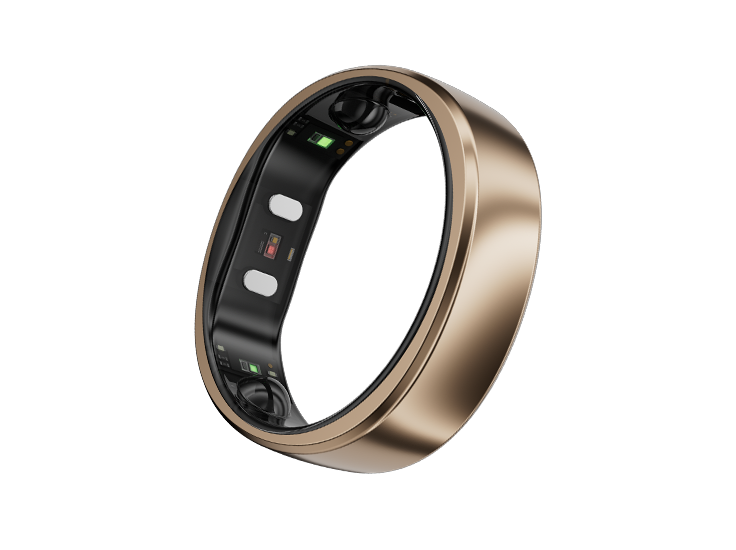
Three scores. Sleep, Activity, and Readiness — each on a scale of 0–100. You open the app and immediately know where you stand.
The Readiness Score is the one that changes how you behave. It pulls together your HRV from the night, your resting heart rate, your temperature deviation from your baseline, and how well you've slept over the past few days. An 85 means you're good to train hard. A 62 means your body is still paying off a debt from somewhere — could be the late night, the stress, the workout two days ago. After a few weeks, you start recognizing the patterns. That's when it gets interesting.
What surprised me most wasn't any single metric — it was seeing how things connected. A glass of wine at 10pm shows up as less deep sleep and a lower HRV the next morning. A hard training day often doesn't fully hit your HRV until 48 hours later. You start making different decisions, not because someone told you to, but because you can actually see the data.
The metrics that add the most value
| Metric | What it measures | Real usefulness |
|---|---|---|
| HRV | Variability between heartbeats | Very high — indicates recovery |
| Deep sleep | Physical recovery phase | High — improves with habits |
| Temperature | Variation from your baseline | High — detects illness/cycle |
| Resting HR | Beats per minute while sleeping | Medium — baseline reference |
| Steps | Daily activity | Low — a smartwatch does this better |
What it can't do (and this matters)
No GPS. No notifications. No payments. The ring doesn't have a screen or a button. You can't use it to track a run route or answer a call. If you're expecting a smartwatch in ring form, you'll be disappointed.
It does count steps, but honestly, step counting is the least interesting thing it does. Your phone does that for free. Where Oura has no equal is in the overnight data — sleep stages, HRV, temperature — and the synthesis of all of it into something actionable.
About the $6/month subscription
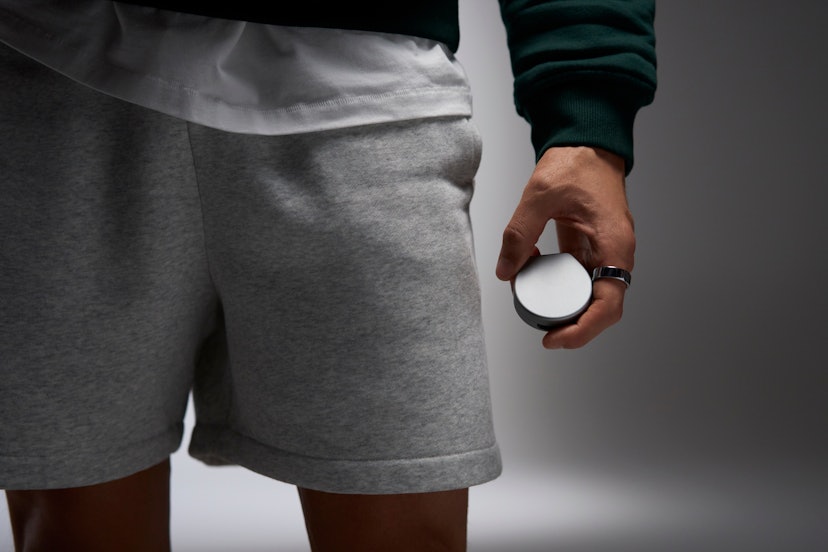
The device is $349–499 depending on the finish, then $6/month after. Without the subscription, you can see basic stats. With it, you get the AI insights, the trend analysis, the coaching, and the Readiness Score with full context. For most people, the subscription is where the value lives.
If $72/year bothers you on principle, the Samsung Galaxy Ring and Ultrahuman Ring Air are both good devices with no monthly fee. They're not quite as accurate, but they're close — and the savings are real.
Frequently asked questions about the Oura Ring
Does the Oura Ring measure blood pressure?
No. The Oura Ring does not measure blood pressure. It measures heart rate, HRV and temperature. For blood pressure you need a dedicated device or some smartwatches like the Samsung Galaxy Watch 6.
How long until it learns my patterns?
The Oura Ring needs about 14 days to establish your personal baseline. In the first weeks data is indicative; from the third week it becomes truly accurate and personalized.
Can you wear it with jewelry rings?
Yes, on different fingers. It's recommended to wear it on the index, middle or ring finger of your non-dominant hand for best accuracy. It doesn't interfere with other rings on other fingers.
Is it available in the US and internationally?
Yes. Buy directly at ouraring.com with shipping worldwide. In the US it's also available at Best Buy and through Amazon.
Does it work without a phone?
The ring collects data without a phone, but needs periodic sync with the app. It can store up to 6 weeks of data locally before needing to sync.
What's the difference between Oura Ring 3 and 4?
Oura Ring 4 has improved sensors for greater accuracy in HRV and temperature, better battery life (7 to 8 days), and a slimmer design. If you have the 3 and it works well, the upgrade isn't urgent. Starting fresh, choose the 4.