How the Oura stacks up against everything else I've tested
Before I get into my own experience, here's the honest numbers across the category — both the claimed spec and what I actually see in daily use:
| Smart Ring | Claimed Battery | Real-World Average | Charging Time |
|---|---|---|---|
| Oura Ring 4 | 8 days | 6–7 days | ~80 min |
| Samsung Galaxy Ring | 7 days | 6–7 days | ~60 min |
| Ultrahuman Ring Air | 6 days | 5–6 days | ~75 min |
| RingConn Gen 2 Air | 10 days | 8–9 days | ~90 min |
| Whoop 4.0 | 5 days | 4–5 days | Wearable charger |
| Apple Watch Series 10 | 18 h | 14–18 h | ~45 min |
The thing I want to emphasize here: even 6–7 real-world days is genuinely transformative compared to a smartwatch. With an Apple Watch you're choosing every single night — charge it while you sleep and lose sleep data, or arrive at work the next morning with a half-dead battery. The Oura eliminates that choice entirely. I charge mine on Thursday morning while I'm making coffee and I'm covered through the weekend without thinking about it again.
Why you probably won't hit 8 days — and that's fine
Oura's 8-day figure is measured in controlled conditions with heart rate sampling dialed way back. Most people — me included — run with continuous heart rate monitoring on, and that's the biggest single drain. The spec is achievable but requires turning off features that make the ring worth buying.
Here's what else pulls down battery life faster than the spec suggests:
- Push notifications from the Oura app enabled
- Background temperature sensing during illness detection
- Automatic workout detection (uses more sampling cycles)
- Wearing the ring in very cold environments (below 10°C / 50°F)
In a normal week with everything running, I'm plugging in on day 6 or 7. That's a comfortable margin — I've never had the ring die mid-sleep, which was my main anxiety before buying it.
How to actually squeeze more life out of it
Four changes I've made or tested that genuinely move the needle:
- Reduce heart rate tracking frequency. In the Oura app, go to Settings → Heart Rate → change from "Every minute" to "Every 5 minutes." This alone adds roughly a day of battery life.
- Turn off push notifications. Each notification ping wakes the Bluetooth radio and uses a measurable amount of power over a full day.
- Disable automatic workout detection if you manually log workouts. Oura constantly listens for motion spikes when this is on.
- Charge every 5–6 days rather than waiting for the low battery warning. Lithium batteries last longer with partial cycles than repeated deep discharges.
Charging: 80 minutes, or a shower top-up that buys you two more days
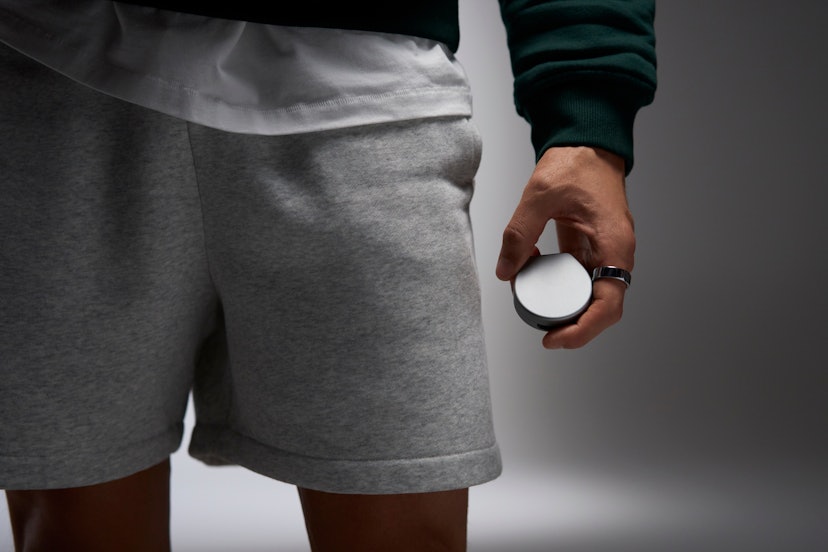
The Oura Ring 4 uses a magnetic USB-C puck charger. From flat zero to 100% takes around 80 minutes, which honestly I've never done — I top it up before it gets that low. The more useful number: 20 minutes while you shower adds roughly 25–30% capacity, enough for another day and a half or two. I've made that work on more than one occasion when I forgot to charge before a trip.
One thing worth knowing before you buy: there's no charging case in the box. Just the cable and puck. If you travel a lot, you need to remember to pack that cable separately — it's not something you can improvise with a random cable from your bag. It's a small annoyance but a real one.
- 6–7 real-world days — no nightly charging
- Wear continuously through sleep every night
- 80-minute full charge — fast enough for a shower break
- Low-battery warning with 1+ day remaining
- Does not reach 8-day spec with all features active
- No charging case included — just a puck cable
- Cold weather reduces capacity noticeably
Is the battery life good enough? My honest take
It's more than good enough for most people. Six to seven real days means one brief top-up — 20 to 30 minutes while you're making coffee or working — and you're covered for the rest of the week. I charge mine on a schedule now rather than waiting for the warning. It takes no mental effort.
The one scenario where it causes problems: if you're the kind of person who forgets to charge devices until they're dead. If the ring dies at 2am while you're sleeping, you lose that entire night's data. The Oura does give you a warning with about a day to go, which is usually enough — but set a recurring reminder to charge every five days and you'll never have this problem.
Versus a smartwatch, this isn't even a contest. The Apple Watch situation — charge overnight and lose sleep data, or charge in the morning and arrive at work with 40% battery — is a real daily friction point for a lot of people. The Oura just removes that entirely. It's one of those things you don't fully appreciate until you've lived with it for a few weeks.
Battery questions I get asked a lot
Does the Oura Ring 4 really last 8 days?
It can, but you'd need to dial back heart rate monitoring frequency — which defeats part of the purpose. With everything running normally, 6–7 days is the real number. That's still dramatically better than any smartwatch, so I wouldn't let the gap from the spec bother you.
How long does it take to charge?
From completely empty, about 80 minutes. A 15–20 minute top-up while you shower adds roughly 20–25% — enough for another day or two. I never let it go fully flat, so I'm usually doing short top-ups rather than full charges.
Does it come with a charging case?
No, and this is genuinely the one thing I'd change. You get the magnetic USB-C puck and nothing else. No case, no backup charger. If you travel, the cable goes in your bag. Just don't forget it — there's no workaround if you do.
What kills the battery fastest?
Continuous heart rate monitoring is the big one. After that: push notifications (they wake the Bluetooth radio constantly), automatic workout detection, and cold weather — below 10°C it noticeably affects capacity. Dropping HR frequency from every minute to every 5 minutes is the single most impactful change if you want to stretch the battery.
How does it compare to the Samsung Galaxy Ring?
Basically the same in real use — both land around 6–7 days. Samsung charges slightly faster at around 60 minutes. If battery life is your absolute top priority, the RingConn Gen 2 Air runs 8–9 real-world days and leaves everything else behind on that metric.
Will the battery get worse over time?
Yes, like any lithium battery — that's just physics. After two years of daily use you're probably looking at 80–85% of original capacity, so closer to 5–6 days per charge. Charging before it drops below 10% slows the degradation. Worth doing habitually.