How it compares to the alternatives
The context that matters: the Galaxy Ring isn't competing with the Oura Ring on sleep accuracy. It's competing on total cost of ownership and ecosystem integration. Keep that in mind as you read the table:
| Feature | Samsung Galaxy Ring | Oura Ring 4 | Ultrahuman Ring Air |
|---|---|---|---|
| Price | $299 | $349 | $249 |
| Monthly subscription | None | $6/mo | None |
| Works with iPhone | ❌ Limited | ✅ Full | ✅ Full |
| Android integration | Deepest (Samsung Health) | Good | Good |
| Sleep staging (4 stages) | ✅ | ✅ | ✅ |
| HRV granularity | Basic trends | Best on market | Comparable to Oura |
| Stress tracking | ✅ | Limited | Limited |
| Menstrual cycle tracking | ✅ | ✅ | ✅ |
| Energy Score | ✅ (Readiness equivalent) | ✅ Readiness Score | ✅ Movement Index |
| Battery life | 7 days | 8 days | 6 days |
| Water resistance | 10 ATM (~100m) | 100m | 100m |
| GPS | ❌ | ❌ | ❌ |
| Screen / notifications | ❌ | ❌ | ❌ |
| 2-year total cost | $299 | $493 | $249 |
What is the Samsung Galaxy Ring, actually?
Samsung entered the smart ring category in July 2024 — and honestly, for a first effort from a massive consumer electronics company, it's impressively well-executed. Titanium build, 10 ATM water resistance, a full sensor suite, no monthly fee. It doesn't feel like a version 1.0 product in the hand.
The thing is: this ring was built for one ecosystem. If you have a Samsung Galaxy phone, it becomes part of something bigger — the ring feeds sleep and recovery data into Samsung Health alongside your Galaxy Watch workout data, your phone activity patterns, and everything else. The resulting Wellness Score is genuinely more holistic than what any single device gives you. That integration is Samsung's actual competitive advantage here, not the specs.
Sleep tracking: genuinely good, just not Oura-precise
The Galaxy Ring tracks four sleep stages — awake, light, deep and REM — using PPG sensors combined with an accelerometer. The Sleep Score in Samsung Health is clear and well-presented.
I'll be straight with you: the sleep staging is good. On most nights the data feels accurate and useful. Where I noticed it occasionally slipping is at the boundary between REM and deep sleep — Samsung's algorithm sometimes lumps them together in a way that inflates one stage at the expense of the other. On a given night it might be off by 15–20 minutes at the transitions. Over a full week of trends? You wouldn't notice.
The thing is, for 95% of people using a smart ring — people who want to understand their sleep and make better decisions, not run clinical research — the Galaxy Ring's sleep data is more than sufficient. Oura's is better, but you're paying a significant premium for that precision. Know what you're actually optimizing for.
Heart rate, SpO2 and stress: where it holds up well
Resting heart rate during sleep is solid — within 2–3 BPM of reference devices in normal conditions. The overnight SpO2 readings are reliable enough to flag potential sleep apnea patterns, which is more than most people think to use it for.
Here's what surprised me about the stress tracking: it's more useful than I expected. Daily stress scores based on HRV give you a directional sense — "you're running hot today, ease off" — and in my experience they're right more often than not. The nuance is that the HRV data is less granular than what Oura or Ultrahuman outputs. You get a stress level, not raw RMSSD values. For most people that's completely fine. If you're the kind of person who wants to plot RMSSD against training load in a spreadsheet, this isn't your ring.
The Energy Score: Samsung's version of the Readiness Score
Samsung calls it the Energy Score — it's the same concept as Oura's Readiness Score, combining sleep quality, HRV trends and activity recovery into a single 0–100 daily number.
I was honestly a bit skeptical at first. Daily scores can feel gimmicky. But after a few weeks I stopped doubting it. The late night I had drinks with friends registered as a 54 the next morning. A week of back-to-back hard runs showed up as cumulative fatigue in the score, which prompted me to take an extra rest day I wasn't planning on. The guidance Samsung Health generates from it is simple and clear. It's not trying to be a biohacking tool — it's trying to tell you how to treat your body today, and it does that well.
The ecosystem integration is where this ring earns its money
I want to emphasize this because it's the thing most reviews undersell. If you have a Samsung Galaxy phone and a Galaxy Watch, the ring doesn't just add another data stream — it combines with the data from both devices into something more useful than the sum of its parts. Your watch tracks workouts. Your phone tracks activity and usage patterns. The ring tracks sleep and overnight recovery. Samsung Health synthesizes all three into a Wellness Score that genuinely reflects your full picture. I found that combination more illuminating than any single device alone.
The flip side: Galaxy AI health features require a Samsung account and a Samsung phone. On other Android devices, the ring works fine but you lose the deeper insights layer. On iPhone, I'd steer you somewhere else entirely — the experience is significantly degraded and you'd be better served by the Oura Ring or Ultrahuman Ring Air.
What it can't do — and why that's fine
No GPS, no screen, no notifications, no live blood oxygen during the day. These aren't failures — they're the same deliberate limitations shared by every smart ring. The category made a choice: maximum sensor accuracy and battery life without the weight, screen anxiety, and nightly charging of a smartwatch. If you need GPS routes or wrist notifications, a smartwatch is what you want. If you want to understand your body without the device demanding your attention all day, this is the right tool.
- No monthly subscription — $299 flat, forever
- Deep Samsung Health and Galaxy ecosystem integration
- 7-day battery life
- 10 ATM water resistance
- Stress tracking and menstrual cycle monitoring included
- Energy Score is a useful daily readiness metric
- Titanium build, comfortable for extended wear
- Android only — severely limited on iPhone
- Sleep stage accuracy below Oura Ring
- HRV data less granular than Oura or Ultrahuman
- Galaxy AI features require Samsung account
- No GPS, screen or notifications
- Best features require a Samsung Galaxy phone
Who should actually buy this ring?
This ring was made for you if: You have a Samsung Galaxy phone and want everything to work together. You're done paying subscription fees and want a serious health ring for a flat price. You track your cycle and want it combined with sleep and recovery context. You want 7 days of battery without ever thinking about it.
Look elsewhere if: You have an iPhone — seriously, save yourself the frustration and get an Oura or Ultrahuman. You want the most precise sleep staging available (Oura is still the answer). You want RMSSD-level HRV detail for athletic training (Ultrahuman or Oura handle that better). You don't have a Samsung device and expect Galaxy AI features to work fully.
Questions that come up a lot
Does the Samsung Galaxy Ring work with iPhone?
Technically it can sync basic data through Samsung Health on iOS, but the experience is meaningfully degraded. The Energy Score, Galaxy AI insights, and personalized recommendations all require a Samsung account and Android device. If you have an iPhone, get the Oura Ring 4 or Ultrahuman Ring Air — you'll get far more out of either.
Is it really subscription-free forever?
Yes, and Samsung has been explicit about it — no subscription now, none planned. You pay $299 once, Samsung Health is free, and you get every feature the ring offers indefinitely. That's a genuinely compelling value proposition over a 2–3 year ownership window.
How accurate is the sleep tracking honestly?
Good enough to be genuinely useful — four stages, solid total time accuracy, slight imprecision at REM/deep sleep transitions. For someone wanting to understand their sleep patterns and make better decisions, this data is more than sufficient. For clinical-grade accuracy, Oura is still the benchmark. But most people aren't running clinical trials on themselves.
How does the Energy Score compare to Oura's Readiness Score?
They're functionally equivalent for most purposes — both give you a 0–100 daily readiness number drawing on sleep quality, HRV and recovery. Oura's has more years of refinement and a larger dataset behind it, but Samsung's version is legitimately useful in day-to-day decision-making. In my testing it was right often enough that I started trusting it.
How long does the battery actually last?
This is one of the pleasant surprises — Samsung claims 7 days and actually delivers 6.5–7.5 in real use with the full sensor suite running. That matches the Oura Ring. Samsung also sells an optional charging case separately, which adds two extra charges for travel — a nice touch the Oura doesn't offer.
Can I wear it swimming?
Yes — 10 ATM water resistance means pools, open water, showers, water sports, all fine. The ring logs heart rate and activity intensity during workouts. No GPS route tracking, but that's true of every smart ring in the category.
My final take: the right ring for the right person
The Samsung Galaxy Ring doesn't out-perform Oura on raw accuracy. It doesn't try to. What it does is give Samsung Android users a complete, well-integrated health tracking experience at a flat price with no ongoing fees — and that's a genuinely strong proposition for a specific, large group of people.
If you're in the Samsung ecosystem, this is your ring. I mean that without qualification. The Energy Score is useful, the sleep tracking will change how you think about recovery, and the total cost over two or three years is hard to argue with. If you're on iPhone, look elsewhere. If accuracy is your obsession, Oura is still the king. But for its intended audience, the Galaxy Ring does exactly what it promises.
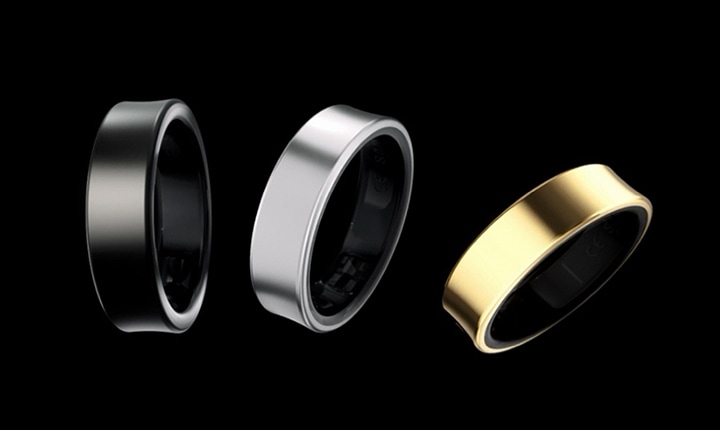
Available at samsung.com, Best Buy and Amazon in sizes 5–13. Titanium Black, Titanium Silver and Titanium Gold — if you're buying one, samsung.com is the safest bet for warranty coverage.
Check price at samsung.com →Related articles
Samsung Galaxy Ring vs. Oura Ring 4: Which to Buy
The two best rings head to head. Which wins depends on your phone and priorities.
REVIEWBest Smart Rings Without Monthly Subscription (2026)
Every no-subscription ring tested and ranked — Samsung, Ultrahuman, RingConn and more.
REVIEWBest Smart Ring 2026: Complete Guide and Comparison
All the top rings ranked — Oura, Samsung, Ultrahuman, RingConn and more.