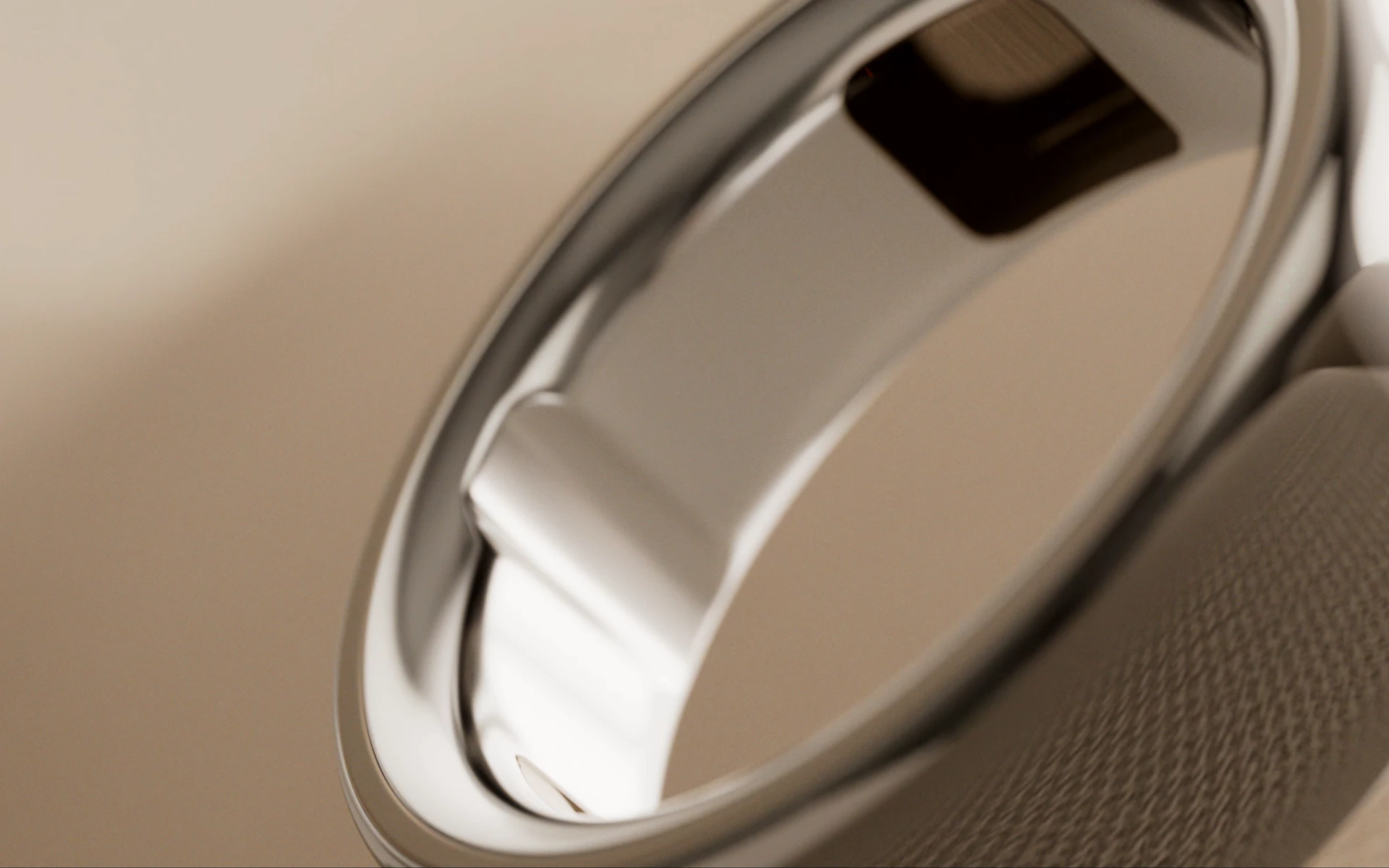
Oura Ring vs WHOOP: Full Comparison Table
| Feature | Oura Ring 4 | WHOOP 4.0 |
|---|---|---|
| Form factor | Ring (finger) | Strap (wrist/bicep) |
| Price | $349 device + $6/mo | Free device + $30/mo |
| 2-year total cost | ~$493 | ~$720 |
| Sleep tracking | ⭐⭐⭐⭐⭐ | ⭐⭐⭐⭐ |
| HRV measurement | ⭐⭐⭐⭐⭐ Nightly + continuous | ⭐⭐⭐⭐⭐ Continuous 24/7 |
| Strain/Training load | ⭐⭐⭐ Basic activity score | ⭐⭐⭐⭐⭐ Core feature |
| Battery life | 7–8 days | 4–5 days (wireless charging on wrist) |
| Body temperature | ⭐⭐⭐⭐⭐ Continuous overnight | ⭐⭐⭐ Skin temp only |
| GPS | ❌ | ❌ |
| Screen / display | ❌ | ❌ |
| iOS + Android | ✅ Both | ✅ Both |
| Water resistance | 100m / 10 ATM | IP68 (no depth rating) |
| Discretion | ⭐⭐⭐⭐⭐ Looks like jewelry | ⭐⭐⭐ Visible wrist band |
The price gap nobody talks about
WHOOP markets itself as "free device + membership." The device is free, yes — but the membership is $30/month. That's $360 a year. Over two years you've paid $720 and you still don't own anything. Cancel the membership, lose access to everything.
Oura Ring is $349 upfront and $6/month after. Two years all-in: $493. You own the hardware. If you ever want to pause the subscription and just track basic data, you can. The difference is $227 over 24 months — enough for a decent fitness tracker on the side.
| Device | Year 1 | Year 2 | 2-Year Total |
|---|---|---|---|
| Oura Ring 4 | $349 + $72 | $72 | $493 |
| WHOOP 4.0 | $360 | $360 | $720 |
What WHOOP genuinely does better
WHOOP built its whole product around one idea: athletic strain and recovery. The Strain score is the best implementation of training load tracking in any consumer device. It measures cardiovascular effort continuously — not just during workouts, but all day — and tells you whether you're ready to push hard tomorrow or need to back off. For competitive cyclists, CrossFitters, or anyone training seriously, that's genuinely useful.
The continuous HRV monitoring is also a real advantage. Oura gives you a nightly average; WHOOP shows you how your HRV shifts hour by hour. Have a rough afternoon? A big meal? A glass of wine? You can see it in the data the same day instead of waiting until morning.
Where Oura is clearly better
Sleep staging. The finger-based sensor gives Oura cleaner data than WHOOP's wrist strap — and it shows. Oura's deep sleep and REM detection is consistently more accurate in head-to-head tests. If you wake up tired and want to know exactly why, Oura gives you more reliable answers.
Body temperature is the other big one. Oura captures your basal temperature overnight — genuinely useful for detecting illness a day before you feel it, and for tracking menstrual cycles with real accuracy. WHOOP measures skin temperature, which is noisier and harder to act on.
And the form factor matters more than people admit. A ring on your finger is invisible — nobody knows you're tracking anything. A WHOOP strap is visible at every meeting, dinner, and beach day. For some people that doesn't matter. For others it's a dealbreaker.
The honest comparison
- Sleep quality is your main concern
- You want lower long-term cost ($227 less over 2 years)
- Discretion matters — ring looks like jewelry
- You track menstrual cycles with temperature data
- 8-day battery without daily charging anxiety
- You train 4+ times a week with real structure
- Training load management is your priority
- You want continuous (not just nightly) HRV
- $30/month feels worth it for the coaching depth
Frequently Asked Questions
Is Oura Ring more accurate than WHOOP for HRV?
Both are accurate for overnight HRV, but via different methods. Oura measures HRV from the finger using PPG (photoplethysmography) during sleep. WHOOP measures from the wrist continuously. Studies show finger-based PPG is more accurate for absolute HRV values; WHOOP's continuous measurement is more useful for tracking intraday HRV changes.
Is WHOOP worth it vs Oura Ring for athletes?
For serious athletes focused on training load management, WHOOP's Strain score and continuous HRV monitoring offer more actionable data than Oura. However, the higher subscription cost ($30/month vs. $6/month) means you pay $500+ more over 3 years. If budget is a concern, Oura Ring + a free training app (TrainingPeaks free tier) is a solid alternative.
Can you wear Oura Ring and WHOOP at the same time?
Yes. Some elite athletes wear both — WHOOP for daytime strain tracking and Oura for overnight sleep and recovery. This gives the most complete picture but costs ~$1,200 over 2 years combined.
Which has better battery life, Oura or WHOOP?
Oura Ring 4 lasts 7–8 days on a charge. WHOOP 4.0 lasts 4–5 days but charges wirelessly while you wear it (using a battery pack that slides onto the band). Both can be worn continuously without removing for charging.
Does WHOOP have a cheaper alternative?
The Oura Ring ($6/month) is the most popular WHOOP alternative. For no subscription at all, the Samsung Galaxy Ring ($299, no subscription) or Ultrahuman Ring Air ($249, no subscription) are strong alternatives. See our full comparison at /reviews/best-smart-ring-2026.